Rib Pain After Training: Could It Be Slipping Rib Syndrome?
Pain at the lower edge of the ribs after training is common and usually harmless. Most of the time it is a strained muscle that settles with rest. When the pain keeps returning, clicks or catches with certain movements and refuses to follow the usual rules, a less familiar cause deserves attention.
When rib pain is more than a strain
Athletes know what a muscle strain feels like. It hurts when the muscle is stretched or loaded, it improves over days and it responds to rest. Slipping rib syndrome feels different. The pain is often sharp, comes and goes, and may be accompanied by a click, pop or slipping sensation in the lower chest or upper abdomen when twisting, bending or lifting.
People are often told the pain is muscular, or that it comes from the heart, lungs or stomach, and tests are normal. Mr Marco Scarci, a consultant thoracic surgeon, describes the condition in his Marco Scarci's slipping rib syndrome guide, and his practice also publishes other guides that explain its symptoms, causes and treatment for patients who have struggled to get a diagnosis.
The condition is benign. It does not damage internal organs, but it can interfere with training, sleep and work, which is why recognizing it matters.
What medical sources say
The United States National Library of Medicine explains in its MedlinePlus entry on slipping rib syndrome that the condition refers to pain in the lower chest or upper abdomen that may be present when the lower ribs move a little more than normal. It says the syndrome usually occurs in the 8th to 10th ribs, known as false ribs, which are not connected to the breastbone.
When the ribs shift, the entry explains, they press on surrounding muscles, nerves and other tissues, causing pain and inflammation. Coughing, laughing, lifting, twisting and bending may make the pain worse. It can occur at any age but is more common in middle-aged adults, and females may be affected more than males.
It also notes that the symptoms are similar to those of other conditions, which makes diagnosis difficult, and that a provider will take a history and perform a physical examination, sometimes with the hooking maneuver to confirm the diagnosis.
Other medical literature agrees that the diagnosis is mainly clinical. A published clinical review of the condition describes diagnosis as clinical, aided by the hooking maneuver and dynamic ultrasound, with definitive confirmation by pain relief after a nerve block. Such descriptions help explain why a normal X-ray does not rule the condition out and why an examiner's hands often tell more than a scan.
Other causes that need to be excluded
Rib pain after training has many possible causes. A pulled intercostal muscle is the most common, and it typically hurts when stretching or breathing deeply. Costochondritis, inflammation of the cartilage where ribs meet the breastbone, causes tenderness at the front of the chest. A stress fracture of a rib can follow repeated overload, as in rowing, and causes focal, constant tenderness.
Some causes are serious. Pain with breathlessness, a fast heartbeat, fever, coughing up blood, or pain spreading to the arm or jaw needs urgent assessment, and the NHS advises calling 999 if a heart attack is possible. Pain in the lower ribs on the right or left after a heavy blow can also involve the liver or spleen.
Because many conditions overlap, a clinician should examine the patient before any label is applied. A slipping rib is a diagnosis made once the other possibilities have been considered. Patience helps.
How it is assessed
Assessment is mainly by examination. The doctor presses along the lower edge of the ribs to find tender points and may perform the hooking maneuver, in which the fingers are hooked under the lower ribs and pulled gently upward and outward. Reproduction of the patient's pain or a click suggests the diagnosis.
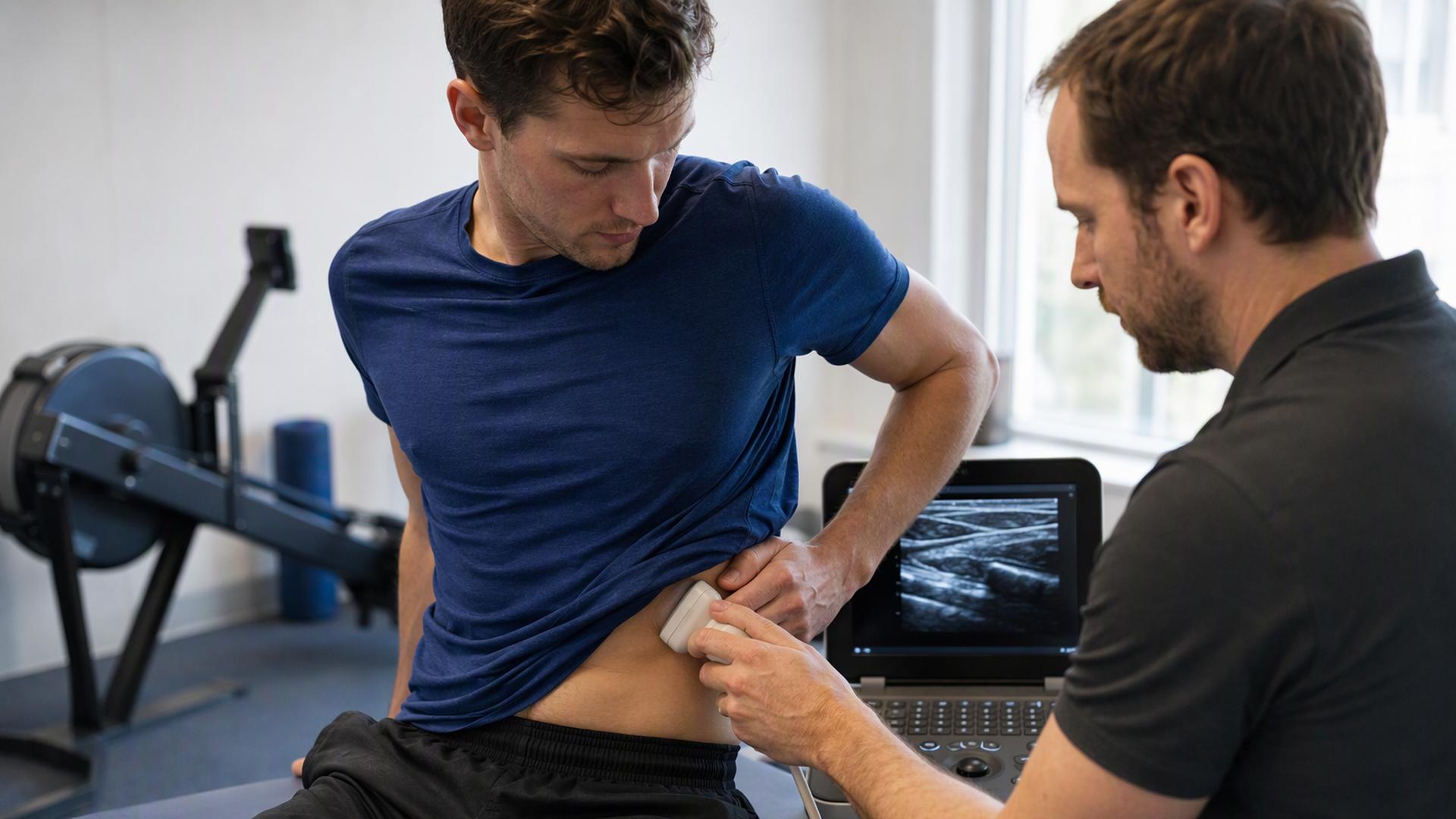
Scans have a supporting role. A chest X-ray or CT can exclude fractures and lung conditions. Mr Scarci's practice describes dynamic ultrasound, which watches the ribs move in real time, as the most valuable imaging test for this condition, because static scans show a rib in one position only.
A nerve block, an injection of local anaesthetic near the affected nerve, can both confirm the diagnosis and give relief. If the pain disappears for a time after the injection, the source is more likely to be the slipping rib. A positive result is a clue rather than proof, and doctors weigh it with the examination.
Management, from training changes to surgery
Treatment usually starts with the least invasive measures. These include relative rest, changes to training that avoid twisting and compression, anti-inflammatory medicine for a short period and physiotherapy to improve posture and core control. The practice states that its treatment is tailored and begins with conservative care, with surgery considered only when symptoms remain disruptive despite it.
For persistent pain, nerve blocks can help, and some people need an operation. Costal cartilage resection removes the loose cartilage tip, and in some cases a short segment of rib, so that it can no longer irritate the nerve. Recovery takes weeks, and a return to full training is staged.
Athletes should ask what the plan is for returning to sport, how long each step takes and what symptoms would mean a step back. Early assessment shortens the road. Keep a diary of which movements trigger pain, since it helps the clinician understand patterns.